Blog

  • Journey towards ISO 9001:2015 accreditation

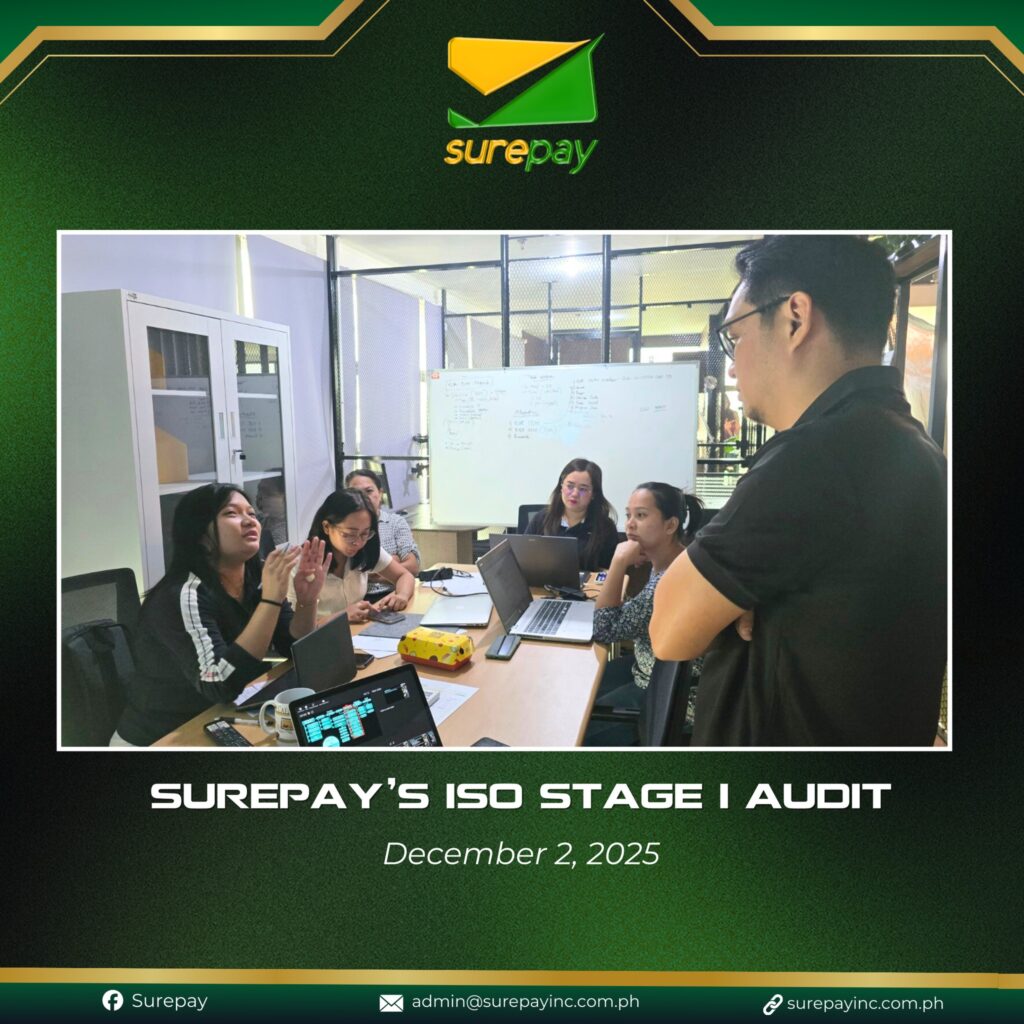
    Every office has that moment when everyone suddenly starts behaving a little too well. Files are labeled perfectly, meetings start on time, and even the printers seem to cooperate. At Surepay Technologies Inc., that moment arrived the day the team decided to chase ISO 9001:2015. The atmosphere shifted from everyday routine to a lively countdown toward something bigger.

    ISO 9001:2015 is the global playbook for quality management. It rewards teams that stay organized, think ahead, and deliver work with consistency. For a fintech company, this means sharper coordination, fewer mistakes, faster responses, and the kind of structure that helps a business grow without losing control.
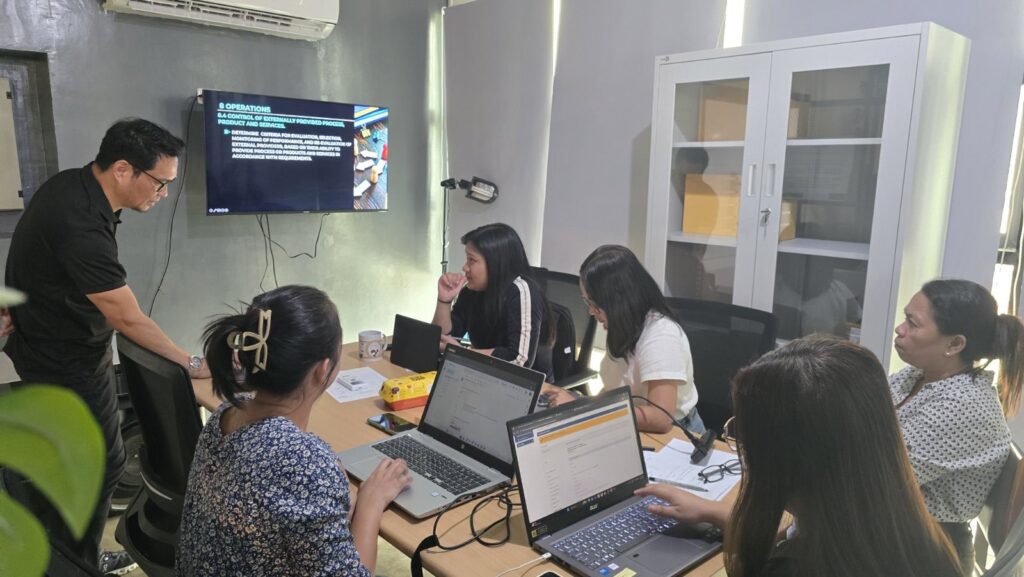
    Team engament

    Surepay is embracing ISO because it wants a framework that supports real progress. Clearer processes make tasks easier to follow. Better documentation keeps everyone aligned. Stronger risk management helps the company stay steady as it expands its services and reaches more clients.

    The journey is shaping a brighter outlook for Surepay. Quality becomes part of everyday habits. Confidence grows. Trust strengthens. The excitement at the beginning now narrows into a focused direction. Surepay is not only aiming for certification. It is building a future where smart systems and consistent excellence become the norm.


  • Partnership with Boracay cash-lite Tourism

    MANILA, PHILIPPINES — Leading finance super app GCash has teamed up with the Municipality of Malay to further promote cash-lite tourism in Boracay Island through the town’s unified ticketing payment system, the eBoracay platform.

    Through the partnership, tourists can easily pay terminal, environmental, and boat fees starting with Tabon Port of Malay, along with more transactions by logging in here. The portal is powered by its electronic payment and collection system provider, Surepay Technologies Inc. (SPTI)

    “The unified automated process and cashless payments will be available in more access ports going to Boracay, as we help build a secure and seamless cashless ecosystem that supports the sustainable development of one of the best islands in the world,” said Jong Layug, group head of GCash B2B.

                    For his part, Atty. Arnold Caballero, SPTI president, welcomed the partnership and their contract with the local government unit of Malay, noting that the collecting required fees via the Tabon Port entry is an essential first step toward providing ultimate convenience to tourists and residents of Boracay.

                             “The enactment resolutions by LGU of Malay paved the way for a unified ticketing payment system which is aimed to consolidate processes and automate payments. It’s really quick and tourists will no longer have to write anything manually or take out from their wallet and look for the cash,” Caballero said.

                              For more flexible cashless payment options, GCash also offers GCredit and GGives features that let users shop now and pay later. GCredit allows tourists to extend their travel budget by providing a credit limit determined by their GScore. This gives adventure lovers more freedom to make the most out of their vacation and experience the best things that Boracay has to offer such as Paraw sailing, tour activities to Puka beach, cliff diving, and famous restos that accept GCash as a payment option while staying safe and without needing to withdraw cash.

                      Another cashless way to pay is via the GGives feature, allowing users to pay for their transactions in up to 24 installments or “gives” for those who go on shopping sprees at D-Mall.

                          “Tourists no longer have to bring cash around and can easily pay in advance before their arrival on the island. Even local residents need not have to fall in line as they can be booked through the system if they so desire in the project’s next phase,” Malay Mayor Frolibar Bautista said.

  • Electronic Fiscalization in Finance and Treasury Operations

    Global taxpayers manage business operations and meet tax obligations by documenting their business activities.

    Documenting business transactions is a threshold issue between the
    informal economy (undocumented) and the formal economy (documented)
    (Medina and Schneider 2018). Generally, a business creates documents relating to (1) obtaining and selling goods and services (purchase and sales invoices, cash register receipts), (2) inventory records, (3) delivery (transport documents), (4) receiving payments (financial records), and (5) accounting data.

    Fiscalization is the vehicle that facilitates the documentation and online availability of business transaction data that, in turn, allows a tax administration to analyze those data to improve tax compliance (Alonso and others 2021). The general expectation is that fiscalization will lead to an increase in the level of tax compliance and a reduction of the tax gap by improving the transparency, access, richness, and accountability of data related to business activities.

    Fiscalization is the vehicle that facilitates the documentation and online availability of business transaction data that, in turn, allows a tax administration to analyze those data to improve tax compliance (Alonso, 2021). The general expectation is that fiscalization will lead to an increase in the level of tax compliance and a reduction of the tax gap by improving the transparency, access, richness, and accountability of data related to business activities.

    Fiscalization that is limited to just collecting and storing of digital documentation by the tax administration is unlikely to have a sustainable impact on taxpayer compliance behavior and is not able to address all tax non-compliance (Casey and Castro 2015). Committed noncompliant taxpayers are unlikely to respond unless the data are demonstrably used by the tax administration to identify and act on them. 

    In general terms, if a fiscalization system is implemented in local government treasury operations, it is aimed to provide the following:

    • Tax Collection efficiency;
    • Improves data collection across local government treasury;
    • Engages consumers in the tax collection process;
    • Provides more timely and richer data for analysis;
    • Assists in identifying and assessing risks and developing corrective actions (facilitate and enforce) to address them;
    • Enables errors to be detected and predicted so that taxpayers can be notified to make voluntary corrections;
    • Provides data for use in enforcement action (debt collection, audit, sanctions, or investigation);
    • Requires tax administrations to expand data storage, increase analytical capacity, and automate risk management and mitigation actions.

    Effective data collection underpins the effectiveness of electronic fiscalization. Data collection commences with the creation of the documents (or e-documents) that taxpayers typically use to manage their business, such as sales invoices or fiscal cash register receipts, that are used for calculating and reporting tax obligations. Complete and accurate reporting of data to the tax administration relies on the timely capture of this documentation and data. Traditional tax reporting models rely on the periodic collection of aggregated business activity data without detail of individual transactions. 

    Fiscalization and digitalization in treasury operations provide tax administrations with real- time and more granular data on a taxpayer’s business transactions and on local treasury collections albeit under decentralize governance set-up. Data collection and consolidation of reports from local treasury happens immediately upon transaction or payment of taxes.

    The local government treasury can adopt a centralized model or accreditation process of several systems. A centralized system or accreditation system process is deemed as a closed systems as the tax administration controls the issuance of receipts or electronic receipts. These can certainly reduce fraudulent collections or embezzlement of collected fees or taxes as data is reported on real-time. However, the efficiency greatly depends on the ability of the coverage of all tax collection units and issuance of a centralized electronic official receipts.

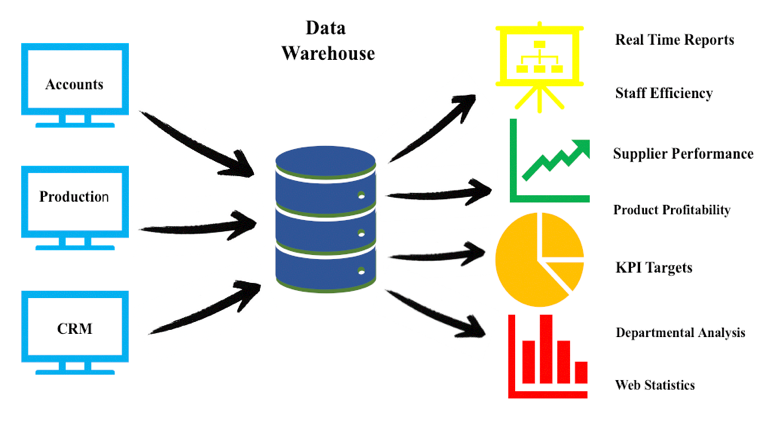
    A data warehouse will be needed to hold the large volume of data collected through the fiscalization processes and third-party sources. A data warehouse is the repository for the collected data allowing access and analysis by the tax administration’s data analysts. If a tax administration does not have a data warehouse or an existing data warehouse will not have the capacity to store fiscalization data, the requirement to upgrade or purchase should be included in the fiscalization implementation information technology plan.